
The Answering Service Industry
By Sam Carpenter, CEO/owner of Centratel
Updated September 1, 2026
The telephone answering service industry has not been part of the telecommunications boom of the last forty years.
It’s a simple truth: Since the 80s, as voice mail, cellular, paging, sophisticated telephone company switching services, and now artificial intelligence have become commonplace, the percentage of businesses and professions using traditional telephone answering services has declined by more than 99%. In lock-step, the number of independent answering services in the United States has declined from over 20,000 to perhaps twelve. COVID-19 (and its 6-foot distancing mandates) had everything to do with the most recent precipitous decline.
And what exactly is a traditional “human-first telephone answering service?”
It’s a business where agents answer incoming phone calls for other businesses that need or prefer a human to handle calls.. Yes, i is accurate to identify these answering services as “human-first” answering services.
And yes, to avoid missing incoming phone calls, whether after-hours or during busy daytime hours (“overflow traffic”), automated services such as voicemail and Artificial Intelligence (AI) are dominant.
And there are other reasons to use human-first or automated answering services: to screen calls, to “capture” calls, and to eliminate incoming calls made in error… or, if the call is relevant, to immediately route the caller to the right person or place.
The question is: does the business owner prefer the caller talk to a machine or to another human being? In these oh-so-automated days of 2026, it’s a profoundly relevant question…
And here’s more about the steep decline in independent traditional human-first answering services, which was, as I noted, dramatically accelerated by the COVID lockdowns of early 2020. Here is a slightly updated excerpt from the recently published 5th edition of my book, published in mid-2024, Work the System: The Simple Mechanics of Making More and Working Less,
“The answering service industry was eviscerated by the social-distancing mandates propagated by various governmental agencies. I estimate that over 99 percent of smaller, low-tech TAS operations immediately disappeared due to those early 2020 social distancing directives, gobbled up by three superlarge mega-answering service operations, three of them foreign-owned.”
And here’s another excerpt from the book:
“This is a textbook example of how ill-conceived/offhand governmental regulation decisions can destroy industries, families, and lives. The off-the-cuff and arbitrary six-foot distancing mandates of early 2020 came out of nowhere, yet were gospel overnight. TSR/agent cubicle arrangements, in which centrally located agents worked side by side, were suddenly deemed illegal. Now, whether technically possible in the specific answering service or not, these operators could only work from separate home offices. The decision to implement the rule wasn’t “science,” and no one even knows who came up with it, but a finger can be pointed at the currently collapsing “expert” class, especially including Dr. Tony Fauci and friends as the chief propagators. (Fauci said, in his House Select Subcommittee on the Coronavirus Pandemic testimony in January 2024, that the 6-foot rule “sort of just appeared.”)
And so, a homegrown and very American “mom-and-pop “industry was destroyed overnight.
Despite these gyrations, although fewer in number and belonging to relatively narrow vertical markets, today’s telephone answering service customer still absolutely requires a real human being at the end of the line, not a recorded message or some gimmicky AI platform (that doesn’t fool anyone.) For these businesses and professions, human-to-human interaction is mandatory. What kind of businesses use a “human first” answering service? Here’s a link to Centratel’s prime vertical markets.
And here’s the immediate problem: Now, there simply aren’t that many high-quality human-first answering services from which to choose. Do a deep dive on ChatGPT, and you’ll find only a dozen services nationwide that focus exclusively on human-first answering (with AI or voicemail sometimes offered as ancillary services)
Interestingly, the human-first answering service industry has historically suffered a bad reputation for quality: an answering service operation is incredibly complex, and a multitude of things can go wrong. It’s based on moment-to-moment human decision-making as well as complex telephone equipment and networks. And, it’s operating 24/7/365. To survive at all is a challenge. Excelling and growing are significant achievements. The challenge is compounded by the typical answering service owner’s failure to invest in strategies that could consistently produce the highest quality.
To stay afloat, many surviving answering services cut costs by paying agents (or Telephone Service Receptionists), low wages/benefits while failing to upgrade equipment. Too many are locked in a who-can-offer-the-lowest-price battle. Predictably, given the industry’s historical low pay/high staff turnover legacy, there are just a handful of high-quality answering services in the United States. These select services offer answering service quality equal to or better than your own front office staff.
And these days, how does one find the highest quality answering service? It’s not easy. There are no resources that you will find that rank quality.
However, at Centratel, we consider ourselves “the highest quality answering service in the United States.” We support this contention with a variety of measurable data, including the most fundamental indicator: the number of customer complaints received in a given period of time. This is the “Customer Reported Error Rate” (CRER) statistic. Our most recent CRER (April through June, 2026) had 1 errors for every 7,342 message transactions processed. Considering the complexity of the work we do (and at the risk of puffery), this is a remarkable statistic.
For further information about the ins and outs of the answering service business, check our FAQ page. And, here are some “case studies” of typical Centratel answering service accounts
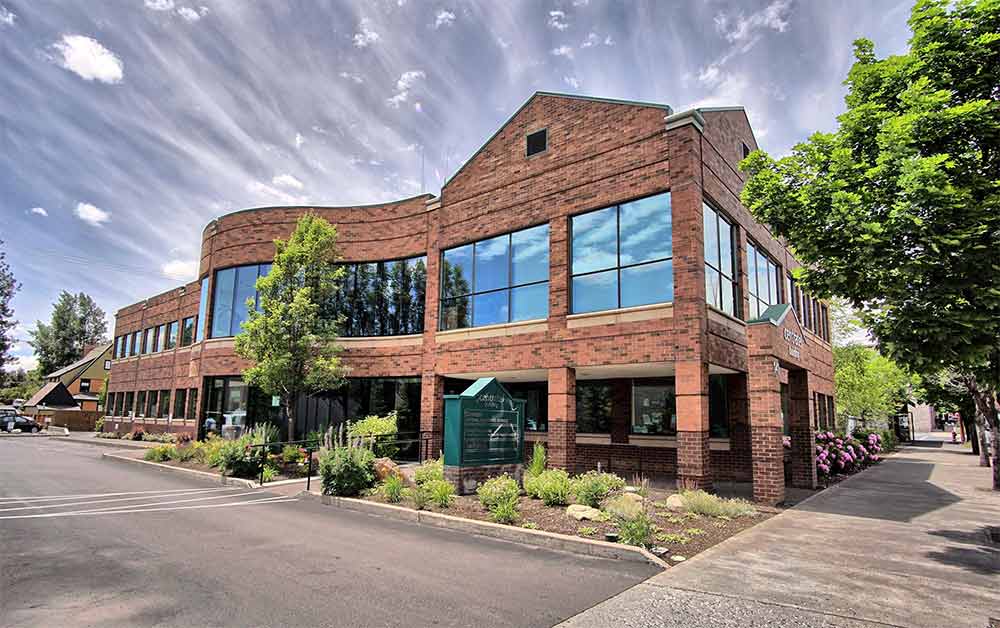
Headquartered in Bend, Oregon, Centratel provides 24/7/365 toll-free service throughout the United States. So, if your business or profession is one of our specialties, investigate this website, then contact us via phone (1-800-664-7159) or through this website via the Price Quote page.
-Sam Carpenter
President and CEO, Centratel